
Toward the Counterintuitive: When Authority Shouldn't Know What’s Happening…
By Maya Pace & Lennon Flowers

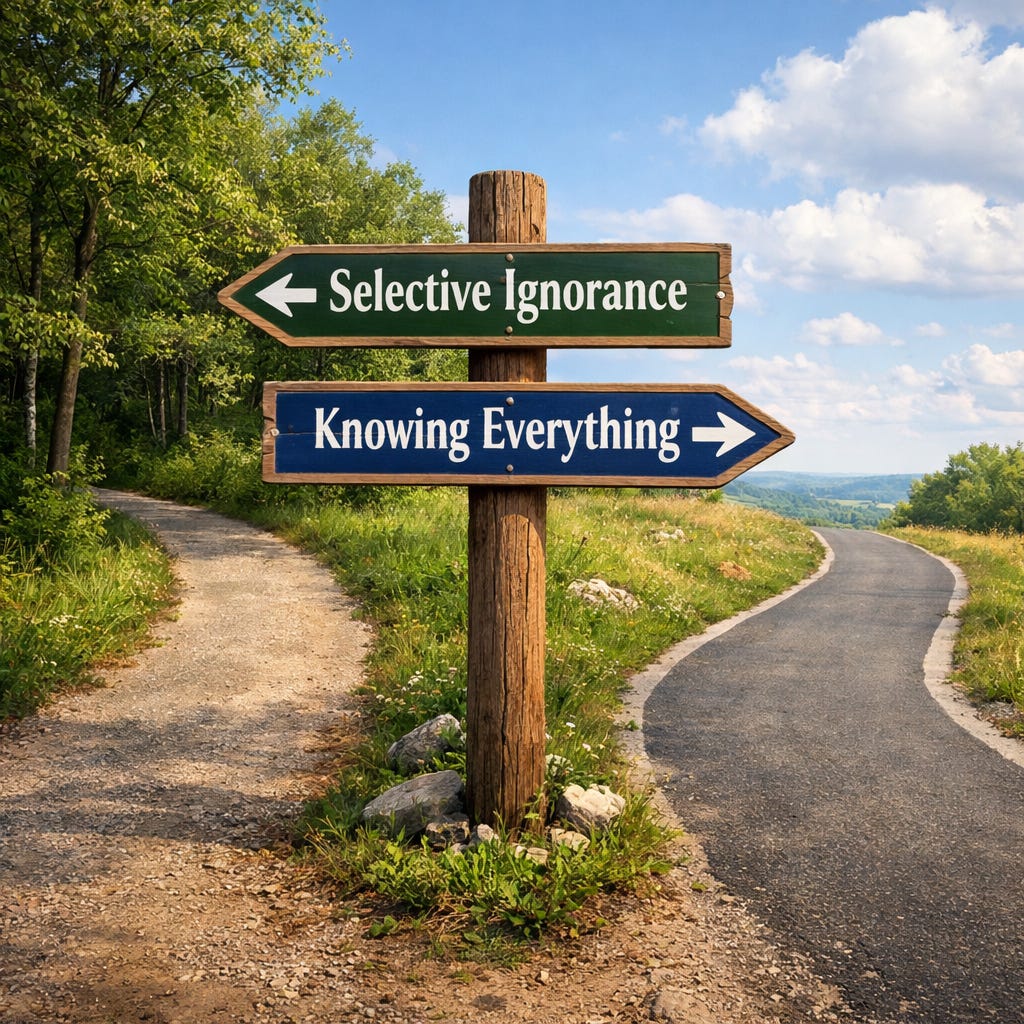
Over the last year, we’ve been working with teams of faculty, staff, and students from seven different campuses, all striving to help folks in their communities move through conflict and mistrust in relationally sound ways. They hailed from schools in different states and different time zones, ranging from a land-grant university in Utah, to a small liberal arts school outside of Orlando. On the surface, their work is as different as the environments in which they operate: One team worked on the meaning of accountability beyond cancellation. One sought to increase support for trans students and faculty within a particular department, on a campus with strong ties to the Church of Latter Day Saints; they quickly realized their first order of action had to focus on building trust across the department as a whole. In another school, a team of Assistant Deans of DEI worked to build a resilient network that could withstand the dismantling of centralized infrastructure, and find ways to support students and faculty alike in continuing to tend to differences in power, privilege, and perception across racial and ethnic groups on campus.
But in each case, their fundamental question was the same: When it feels like everything and everyone is splintering, how can we hold our community together?
We were recently talking to a researcher, who’d been hired to evaluate the impact of one of the grants that underwrote that work. “What you’re suggesting is really counterintuitive,” he said.
He’d asked about the role of authority figures — college presidents, provosts, boards — in sustaining the type of changemaking and relational work that our cohort members were engaging with. He’d expected me to tell him that success hinged on buy-in from the top: that in places where there was supportive leadership, especially from the college president, you could expect to see big changes afoot – widespread adoption of curricular and co-curricular programming, and the like. Where it was lacking, efforts would invariably falter.
But that hasn’t been our experience. We’d just told him that none of their efforts had presidential backing. And indeed, many of them would have been stymied, or even failed, if they’d waited for that approval.
Which brings us to the distinction between authority and leadership. What is the difference between exercising strong leadership and exercising authority? When is authority a liability? And for those of us operating without the support of good leadership from the top, what does right action look like right now?
Resting in Authority
Humans are neurobiologically wired to dislike uncertainty. When we are faced with it, we reach for a variety of instinctual coping strategies: We try to find things we can control. We avoid the issue. We use reductive explanations to help sense-make.
And we turn to authority to give us direction: We turn to those behind a podium, to tell us what to do or what to think. We want our politicians to tell us that they have the answer; we don’t want them to tell us that it’s going to be hard. Even when we’re searching for an answer or what to say next, our eyes flick upward. This moment is no exception.
The last year has seen a surge in college presidents introducing dialogue programs at scale, and other efforts to supplant DEI efforts with pluralistic practices. These interventions are, by definition, designed to lower the heat, and to reduce disequilibrium by providing us with spaces that bridge differences and facilitate healthy dialogue. They are, necessarily, “safe.” These interventions are lauded as critical for helping campuses navigate polarization, hold ideological diversity, and navigate a pluralistic community.
Authority figures can be very good at providing order, protection, at lowering the heat, containing people, offering structure and strategy – and those roles can be especially valuable in moments of crisis, when the heat on campus bubbles to a potential breaking point. These types of interventions are an important part of repair.
But they cannot be the whole picture. If anything real is to change – if we are to deal with the simmering anger present across all parts of American life – we’ll also need interventions that can deal with rage, with accountability, with repair, and that will surface creative, unsanctioned ways to engage with not only the content of our disagreement, but the force and emotion that comes with it.
We’ve seen what happens when authority tries to lower the heat before the force behind it has been tended. Over the past two years, college campuses have erupted as ground zero for the struggle over questions of national and international morality and justice. As the US contended with Hamas’ attack on October 7, the subsequent Israeli invasion of Gaza, and US involvement in the rising death toll of Palestinian people, many authority figures — presidents, heads of departments — did many things. Many of them tried to exert authority and called it leadership. Very few of these actions led to anything other than deepened and entrenched division. (We define leadership as asking people to look at a difficult reality, and helping them move through that process. Hardly any of those efforts met that standard. But that’s a piece for another time.)
Leadership often involves risk-taking. It involves actions that will be destabilizing, that raise the heat, that lead to our facing something difficult. These interventions often happen in the shadows, to the right, left, or just beneath the authority figures, allowing the authority to maintain plausible deniability, while still seeding something essential.
Need-to-Know Basis
There are many historical examples of how unsanctioned and unauthorized momentum can seed pressure for essential, pro-relational, pro-democratic change – particularly on college campuses. Student groups and independent organizing were foundational in resisting consolidations of power in WWII and in dismantling the dictatorship in Serbia (and again, more recently in Serbian history). They were core to the civil rights movement, and the anti-apartheid movement. College presidents did not sign off on those student initiatives. They couldn’t have, without risking their own removal, or damaging the power and legitimacy of those grassroots efforts. And, critically, the organizers didn’t wait for authorization — consciously or unconsciously they understood that giving authority some amount of plausible deniability could actually be a helpful tactic.
This remains true. Recently we worked with a senior administrator whose office was the site of a student sit-in over the administration’s response to Gaza.
Together with the campus’ Director of Spiritual Life, he set out to rebuild the badly frayed trust between students and administrators. The two of them quickly realized, however, that the situation was still too hot; there was little desire – let alone capacity – for trust-building and repair between students and the administration at that stage. They noticed that there were other ways to engage some of the conditions that led to such rupture: The entire campus community was participating in a culture of disposability, and students had no way of navigating conflict without exiling or cancelling each other. Tending to this unspoken norm, they felt, could indirectly deepen their capacity to engage in conflict well elsewhere on campus.
They recruited student leaders who each possessed strong social capital and cultural influence among particular student groups and voices on campus. Together, we began training them up in skills related to conflict navigation.
Once in the room, students raised some challenging questions about when and when not to partner with authority figures, and how – when to put pressure on them, when to engage in negotiations, when to fall in line, etc. One shared a story of sitting down for a listening session with administrators, only to be told all the things that were off the table; it felt, they said, that they were being boxed into a corner from the start.
It mattered that, as facilitators, we had no skin in the game – that we were not representing a particular set of interests on campus or in its leadership. Had the invitation come from on high – or even if it had been publicly sanctioned by the college president – we would have had to measure our words with care, with less room to honestly address the feelings and concerns that were being surfaced. (Pro-tip: We’ve never met a feeling that shrunk because it was ignored.) Had those in power known talking openly about these tactics was to be a part of the conversation, they may have been forced to discourage it to protect their own legal standing.
Authority figures in many different landscapes are confronting the same threats right now: they are targeted and scapegoated, as a means of undercutting entire institutions or fields of work. The same pattern is happening in higher education (here and here), business, nonprofits, philanthropy, and (obviously) government. Faced with real risks, people in authority can default to the choice we’ve seen them make again and again: Exert their power by attempting to command and control what’s said, by whom, when, and how, all in order to placate or otherwise fly under the radar.
Or they can choose strategic opportunities to do something else — exercise plausible deniability, for instance, freeing those below them to operate in ways that they themselves cannot. By simply getting out of the way, they can quietly support nascent movements that can put counter-pressure on them.
By the same token, those without authority, or those — like our friends in the administration of the campus mentioned above — who have varying degrees of authority, also must consider when and how to bring more senior authorities to the table, versus when it’s actually more effective to just leave them out of it (for the time being).
Relational change needs pressure from various groups that are pushing the people in the system to shift their behavior, along with their hearts and minds. If good work is going to happen at all, authority sometimes cannot know about it.
We have to look up, of course we do. But it seems we’ve forgotten that authority figures have rarely been the ones signing off on widespread culture change. That happens after groups of people take it upon themselves to model something different, often independent of authority, sometimes without authority at all. It begins when we look around, not just up.
—
Author: Maya Pace & Lennon Flowers (bios)
This piece to me on a day when I had forgotten how much slower the speed of trust is from the rest of life. I am so excited to exercise this concept from many angles, including:
-choosing when to coach my youth activists to approach authority figures
-choosing when to insert myself as my own sort of authority figure v. when to let things happen out of my sight with more trust